How to Keep a Toddler Entertained on a Long Flight (Without Losing Your Mind)
As an Amazon Associate I earn from qualifying purchases. Prices and availability are accurate as of the date/time indicated and are subject to change.
🔍 How this guide was put together (Editorial Standards)
This guide compares options using published manufacturer specifications, patterns in publicly visible owner reviews, and reputable expert sources. We do not operate a physical testing lab; see our how-we-research page for details.
EDITOR'S PICKS
Top Picks


📑 Table of contents
A long flight with a toddler is won or lost before you board. The parents who look serene at 30,000 feet aren’t traveling with unusually mellow kids — they packed a rotation of small distractions and knew exactly when to deploy each one. Toddlers don’t need a suitcase of toys; they need novelty delivered in the right order at the right moment. Here’s how to stretch a bag of cheap surprises across a transatlantic flight without melting down alongside them.
The golden rule: rotate, don’t dump
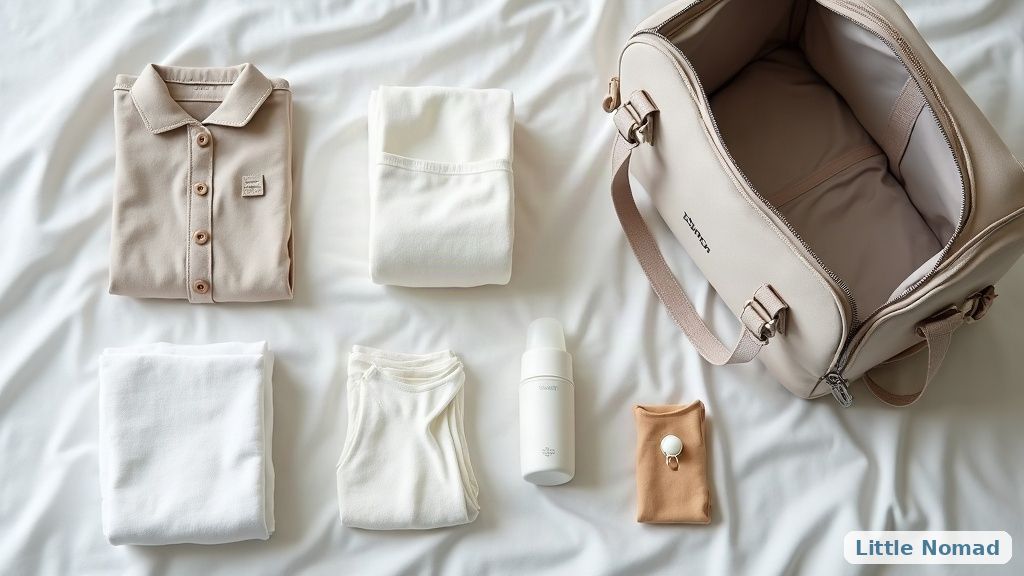
The single biggest mistake is handing over everything at once. A toddler burns through a pile of toys in ten minutes, and then you’ve got nothing left for hour four. Instead, wrap or bag small items individually and hand them out one at a time, roughly every 20–30 minutes. The unwrapping itself is entertainment, and the steady drip of “what’s next?” keeps them engaged far longer than the toys themselves ever could.
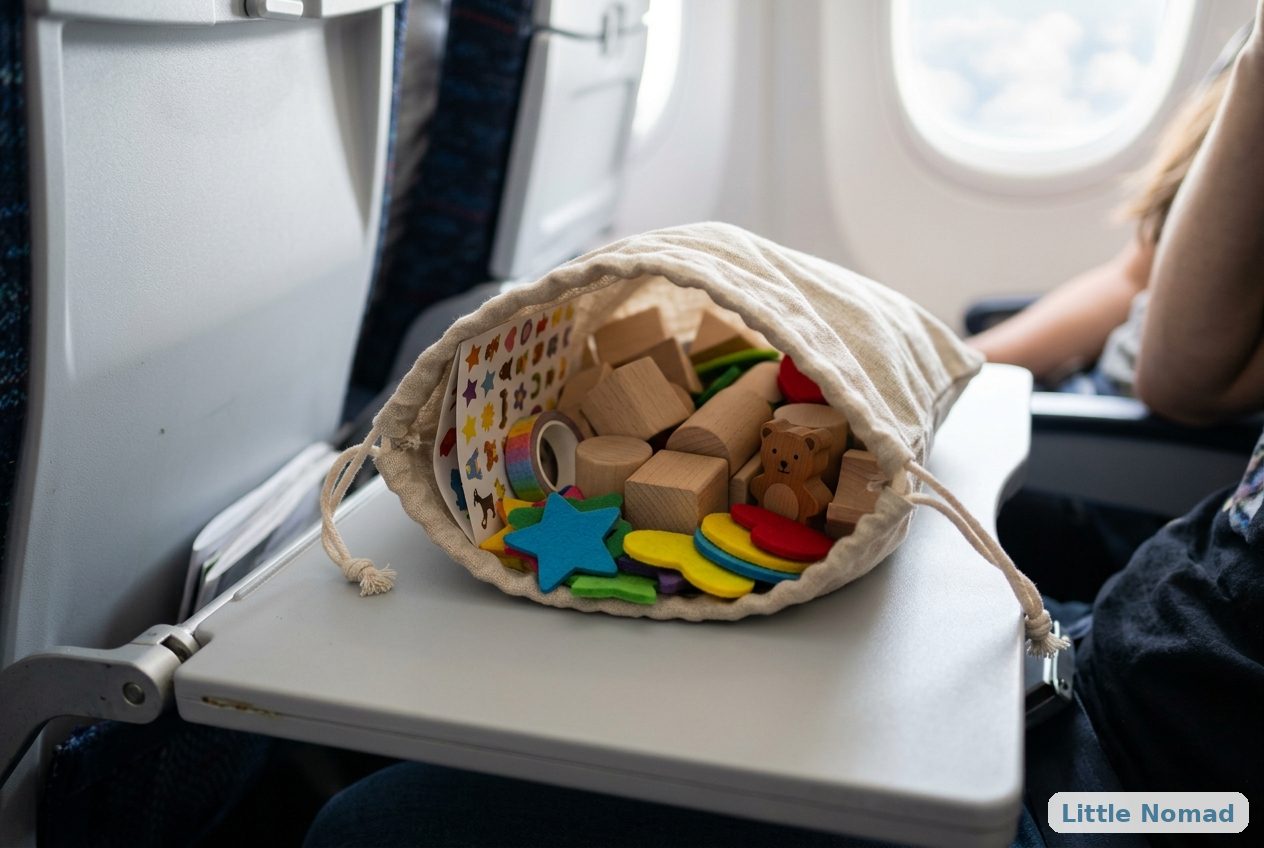
Aim for 8–12 tiny items for a long-haul flight. They don’t have to be new or expensive — a few can be favorites your toddler hasn’t seen in a couple of weeks. Out of sight for two weeks reads as “brand new” to a two-year-old.
What actually goes in the bag
Reach for quiet, low-mess, self-contained activities:
- Reusable sticker books and window clings — sticking and re-sticking buys serious minutes and makes zero noise.
- Water-reveal coloring pads — color appears with a water-filled pen, so no lost crayons rolling under seats and no marker on the seatback.
- Wooden or felt shapes — quiet to handle, impossible to lose down a gap the way small plastic pieces are.
- A few board books — familiar stories are soothing and double as a wind-down cue.
- Painter’s tape — genuinely underrated; a toddler will stick strips to the tray table for a shocking length of time.
Skip anything with small parts that roll, loud electronic toys, or hundreds of tiny pieces you’ll be fishing out of the seat for the rest of the flight.
Snacks are entertainment, not just fuel
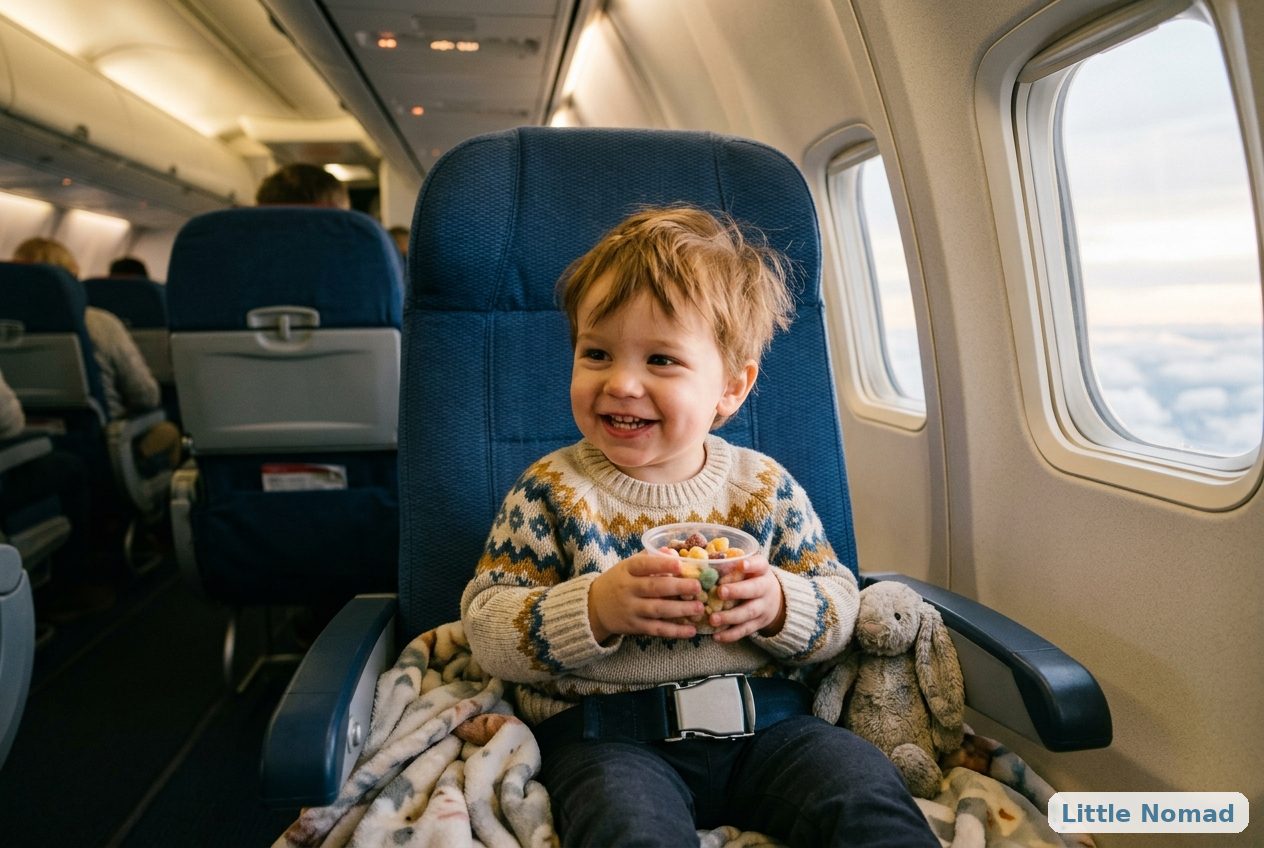
Never underestimate a snack that takes effort to eat. Foods that require work — a pouch to suck, freeze-dried fruit to pick up one piece at a time, or a cup of dry cereal — stretch minutes and keep little hands busy. Pack more than you think you need; delays happen, and a hungry toddler at hour six is a losing battle. Snacks also do double duty during takeoff and landing, where the chewing and swallowing helps with ear pressure.
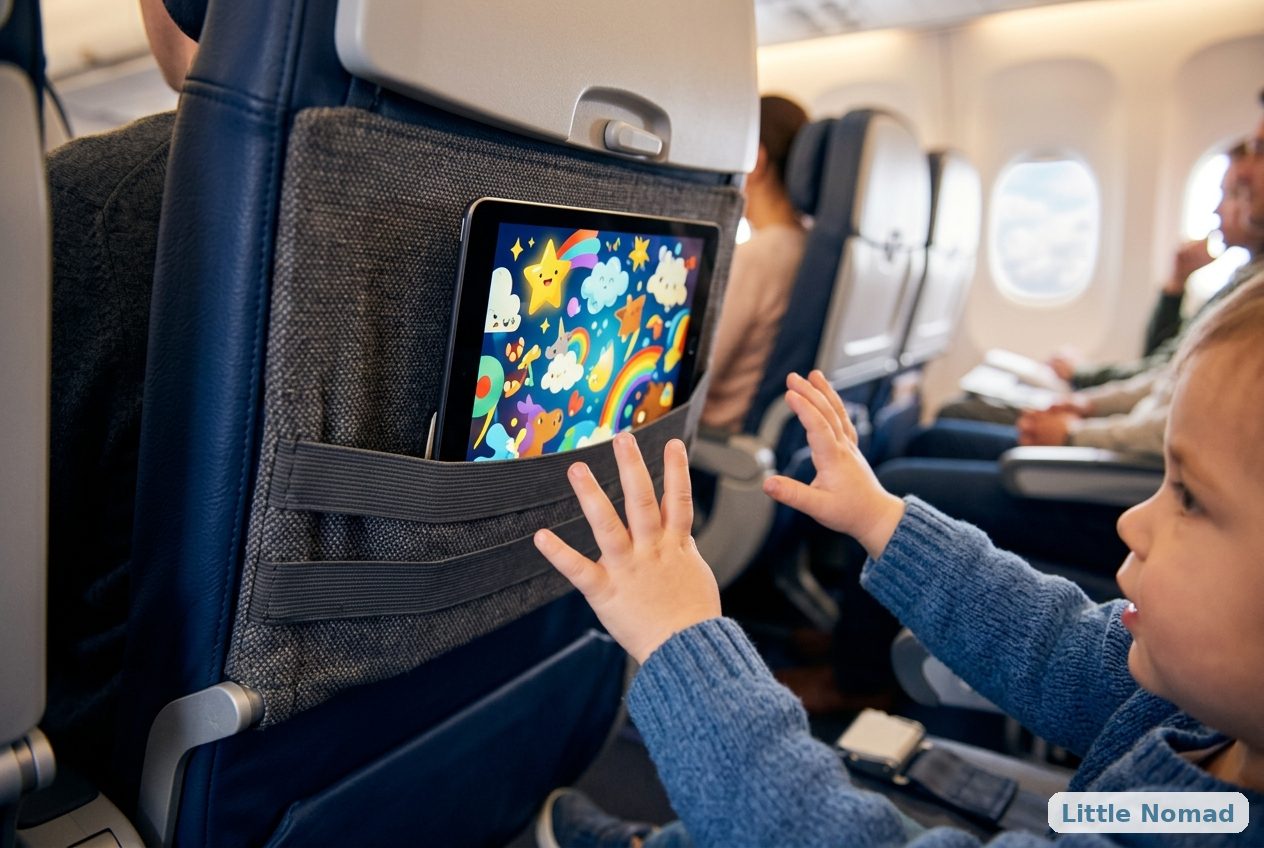
Screen time: use it, don’t spend it too early
Yes, bring the tablet — a long flight is not the day to fight the screen-time battle. But treat it as your closing pitcher, not your starter. Download shows and simple toddler apps in advance (never rely on in-flight wifi), pack kid headphones and a charging cable, and hold the tablet in reserve for the back third of the flight when your bag of tricks is running dry. If you lead with the screen, you’ve got nothing left when the novelty wears off. Deployed late, it can carry you through the final stretch and even a nap.
Timing beats everything: takeoff, landing, and sleep
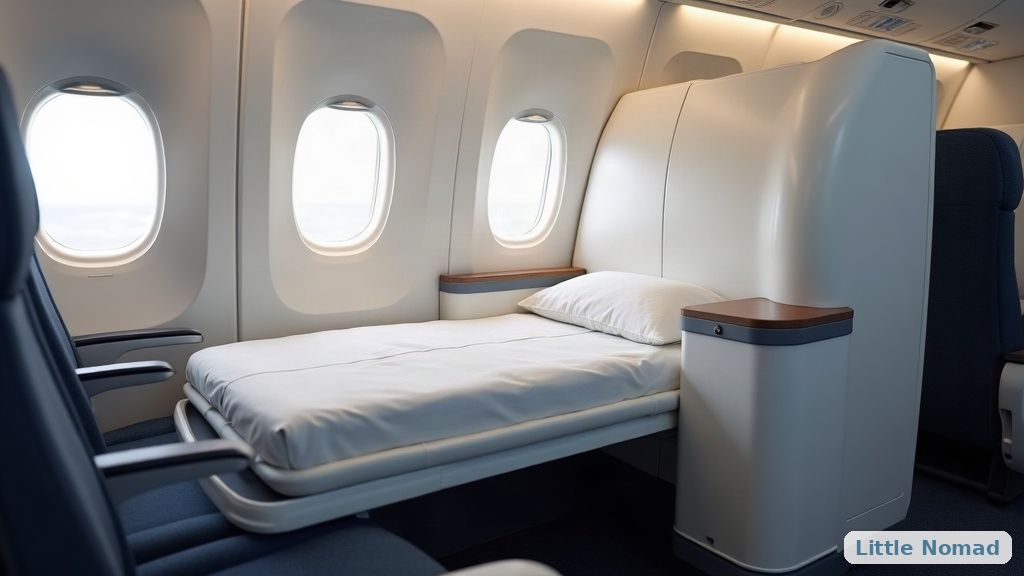
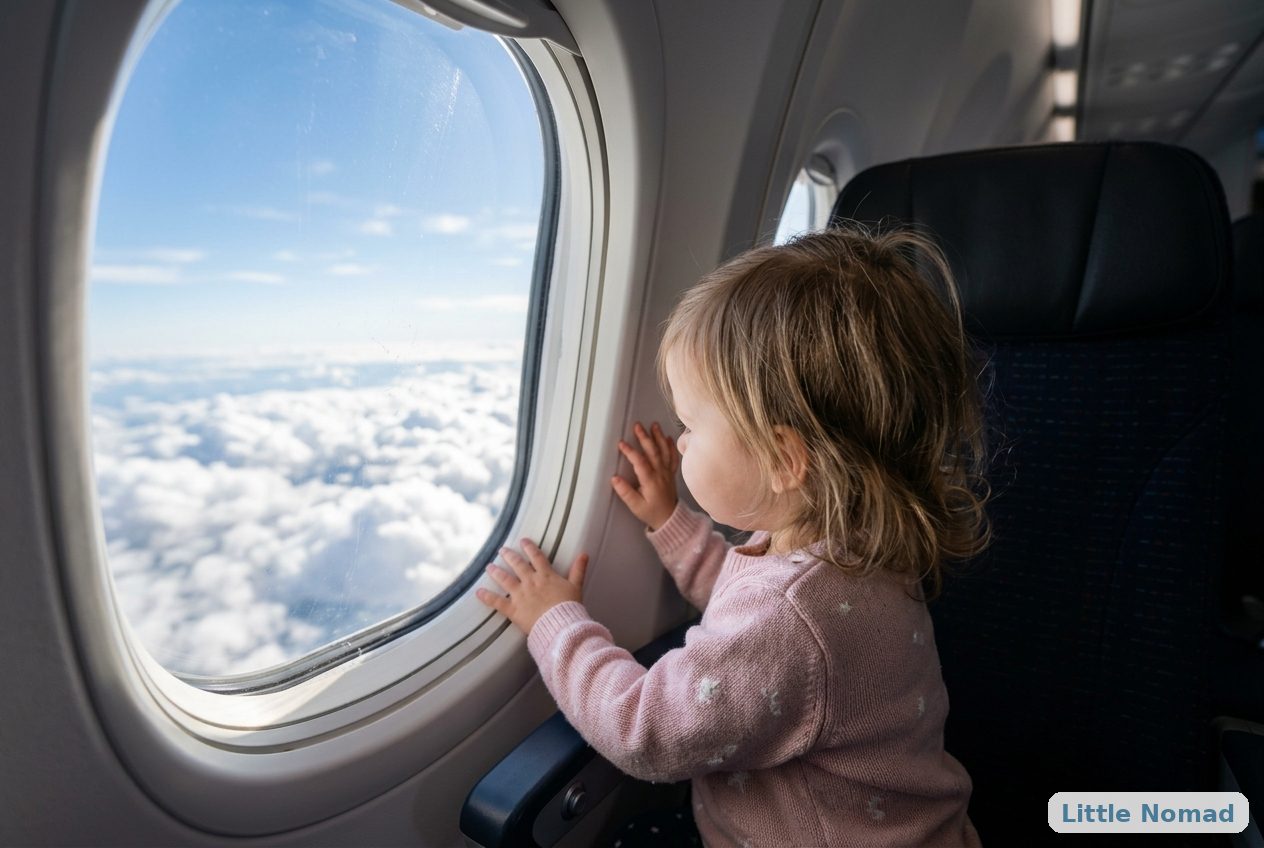
The two danger zones are takeoff and descent, when ear pressure peaks. Have something to suck, chew, or drink ready for both — a pouch, a sippy cup, or a snack. For overnight flights, try to protect a version of the bedtime routine: dim the light, a familiar book, a comfort object, and resist over-stimulating them right before you want them to sleep. A well-timed nap is the best “entertainment” of all.
Set yourself up at the airport
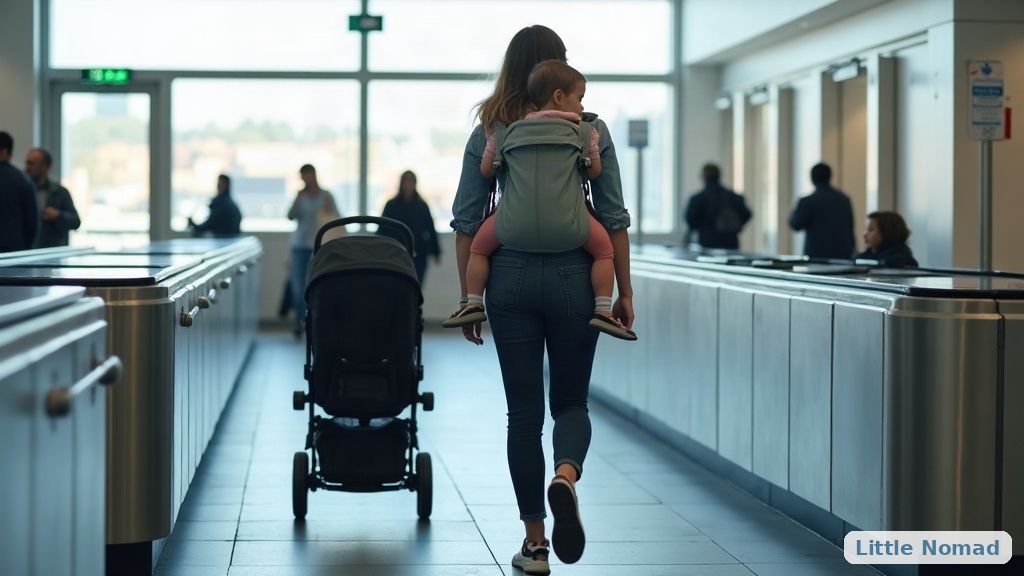
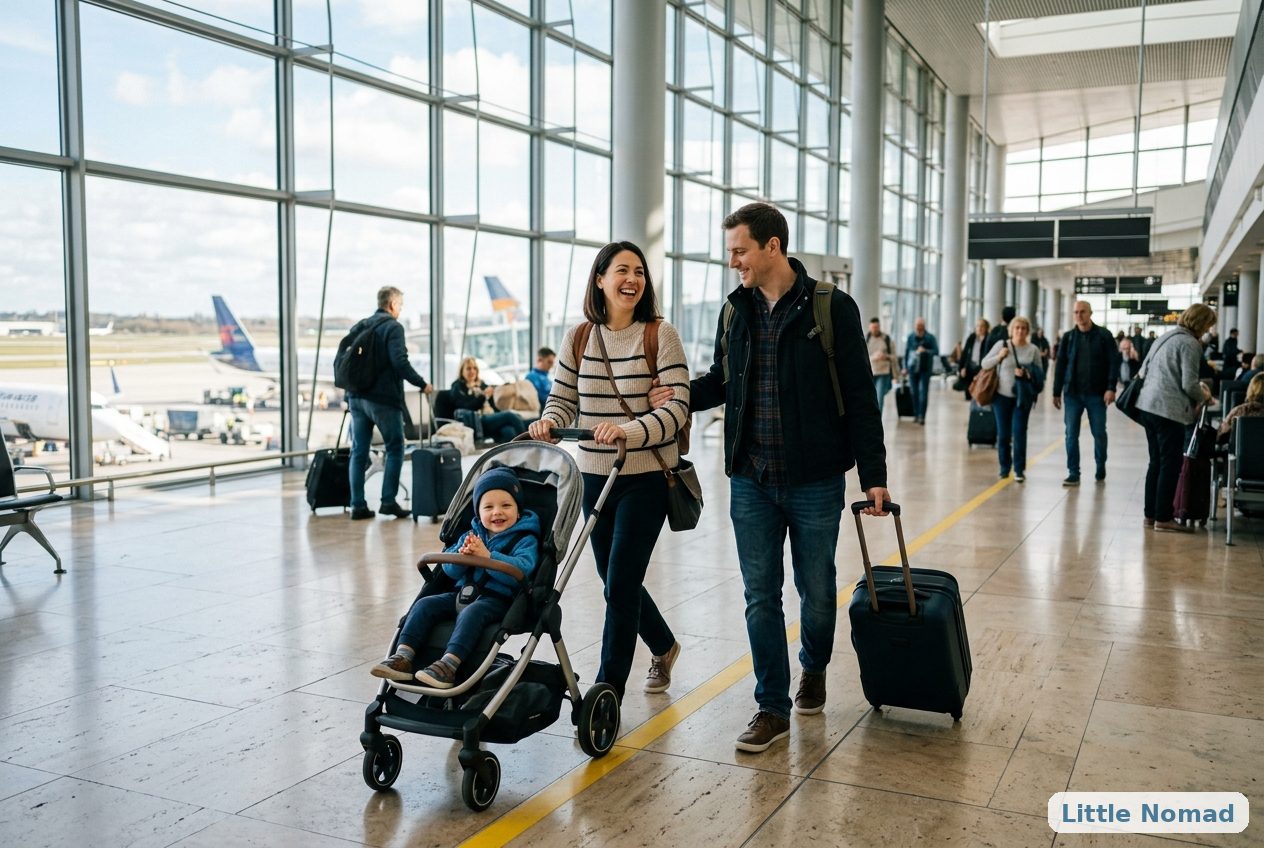
Burn energy before you board. Let your toddler run, walk, and explore the terminal rather than sitting strapped in a stroller the whole time — a tired toddler is a sleepier, calmer passenger. Board thoughtfully, too: some families love pre-boarding for the extra setup time, while others prefer to board last to shave 20 minutes off the time trapped in the seat. If you’re still sorting out the stroller logistics, our guide on gate-check vs. carry-on strollers walks through which option keeps you mobile right up to the jet bridge, and the flying with a baby checklist covers the broader packing strategy that makes the whole trip smoother.
Manage your own expectations
Here’s the honest part: some fussing is normal and okay. You are not responsible for keeping an entire cabin blissfully undisturbed, and most fellow travelers are far more sympathetic than the horror stories suggest. Do the reasonable things — rotate the surprises, feed on the danger zones, save the screen — and let go of perfection. If you’re choosing gear for the trip, a compact, gate-friendly setup like the ones in our best lightweight travel strollers for airplanes roundup keeps you nimble through the terminal so you arrive with energy to spare.
📚 Related In-Depth Analysis
- Compare findings with our guide on Airport Security With A Baby.
- Compare findings with our guide on Car Seat Travel System Basics.
📚 Related In-Depth Analysis
- Compare findings with our guide on Best Lightweight Travel Stroller Airplane.
- Compare findings with our guide on Airport Security With A Baby.
🔧 Interactive Planning Tool
Need exact measurements for your setup? Use our Airline Cabin Stroller Overhead Sizing Matrix to Verify folded dimensions against strict IATA overhead cabin luggage limits.
The short version
Pack 8–12 tiny surprises and dole them out one at a time. Bring snacks that take effort to eat. Hold the tablet in reserve for the final third. Have something to suck or chew for takeoff and landing. Wear your toddler out at the gate. Do that, and a long flight goes from dreaded to genuinely doable — no magic required, just a plan.